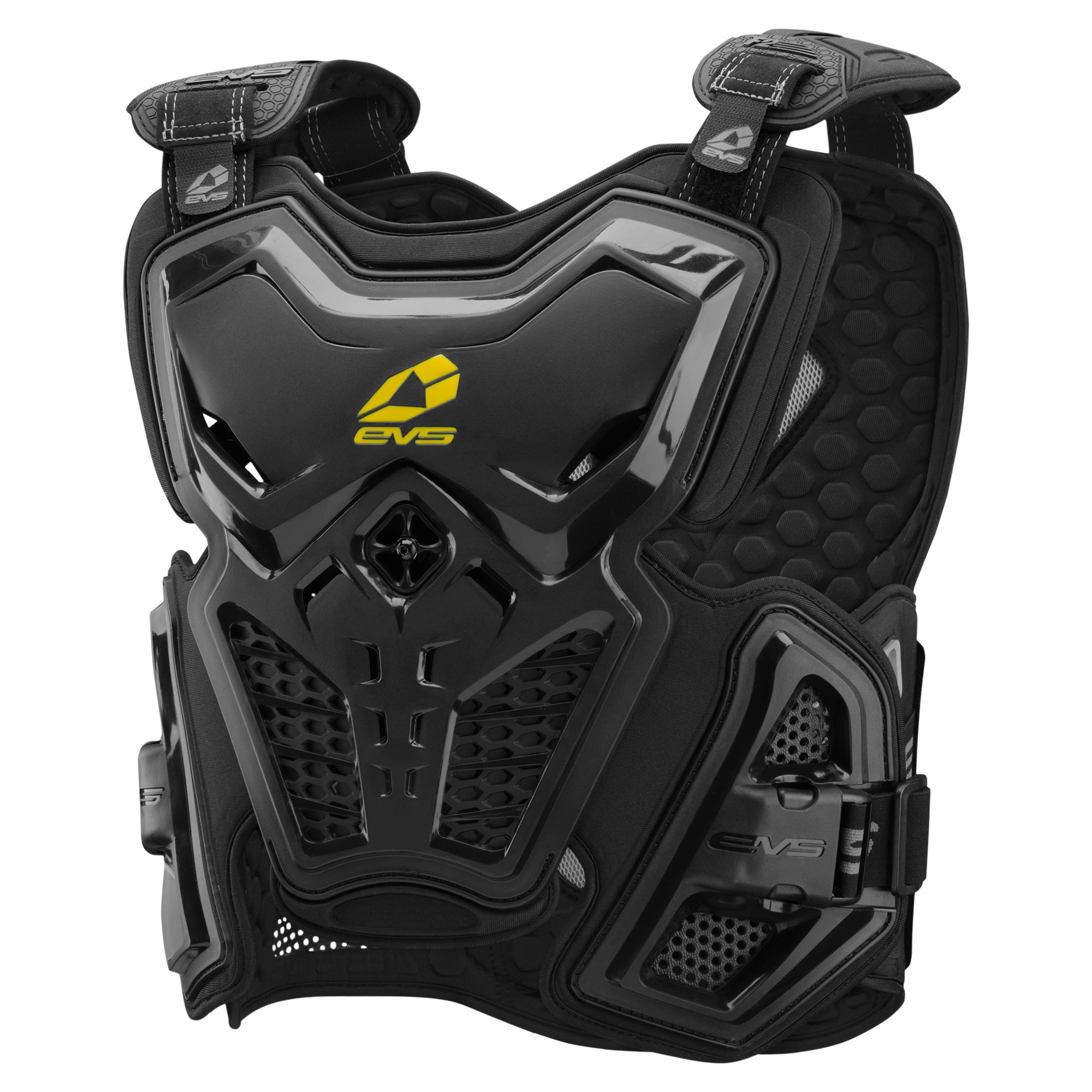
The Most Misunderstood Label in Motocross: Stone Shield vs. Impact Armor
Many dirt bike riders assume that any hard-shell chest guard worn over or under a motocross jersey provides crash impact protection during a high-speed get-off or handlebar strike. In European and FIM homologation testing, off-road upper-body gear is divided into two completely different laboratory standards: EN 14021 (Stone Shields) and EN 1621-3 / EN 1621-2 (High-Energy Impact Protectors).
Laboratory Test Comparison: EN 14021 vs. CE EN 1621-3 & EN 1621-2
| Standard Code | Official Classification | Impact Test Energy (Joules) | Max Permitted Transmitted Force |
|---|---|---|---|
| EN 14021 | Roost Deflector / Stone Shield Only | 10 Joules (1 kg striker dropped from 1 meter) | ≤ 27 kN peak force (deflects flying rocks/roost; minimal crash absorption) |
| EN 1621-3 Level 1 | CE Level 1 Chest Impact Protector | 50 Joules (5x the impact energy of EN 14021) | ≤ 18 kN average (≤ 24 kN single strike) |
| EN 1621-3 Level 2 | CE Level 2 Competition Chest Armor | 50 Joules | ≤ 12 kN average (≤ 15 kN single strike) |
| EN 1621-2 Level 2 | CE Level 2 Spine / Back Protector | 50 Joules (kerbstone anvil striker) | ≤ 9 kN average (≤ 12 kN single strike) |
1. When to Choose a Stone Shield vs. CE Level 2 Chest Armor
- Lightweight Polypropylene Roost Deflectors (EN 14021): Engineered with thin high-density polyethylene (HDPE) or polycarbonate shells backed by thin bio-foam. Ideal for hot-weather motocross riders seeking maximum ventilation and deflection of rocks thrown by bikes ahead, worn neatly under or over a jersey.
- Viscoelastic / Multi-Cell CE Level 1 & Level 2 Chest Protectors (EN 1621-3): Combine a rigid outer shell (to spread handlebar end or rock point loads) with a rate-sensitive non-Newtonian polymer or cellular honeycomb core that absorbs 50-Joule blunt trauma to the sternum, ribs, and thoracic spine. Required by FIM competition regulations.
2. Cervical Neck Brace Integration & Thoracic Cutouts
Modern off-road chest protectors feature removable upper sternal and rear thoracic modular plates coupled with elastic shoulder straps designed to secure a cervical neck brace. During a head-first impact, a neck brace works through Alternative Load Path Technology (ALPT)—catching the lower rim of the full-face helmet before the cervical vertebrae reach extreme hyperflexion, hyperextension, or axial compression, and channeling that energy safely across the broad scapular and sternal shelves of the chest protector.
Shop Off-Road Roost Guards & Body Armor
Browse certified roost deflectors, chest protectors, and armored jackets in our Protective Gear & Apparel Department.


