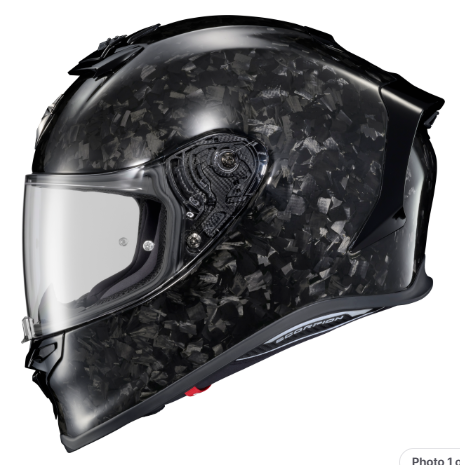
Choosing the Right Motorcycle Helmet
A motorcycle helmet is one of the most important pieces of equipment a rider can buy. But choosing the right helmet is not simply a matter of finding the most expensive model, picking a favorite brand, or buying the helmet that looks the best. A helmet needs to be appropriate for the type of riding you do, properly sized, correctly shaped for your head, comfortable enough to wear for long periods, and certified to an appropriate safety standard.
The most important principle is simple: the best motorcycle helmet is the one that fits your head correctly and that you will wear properly every time you ride.
Start With the Type of Riding You Do
Motorcycle helmets are designed around different types of riding. Before worrying about colors, graphics, Bluetooth systems, or other features, determine what type of helmet makes sense for your riding.
Full-Face Helmet
For most street riders, a full-face helmet is the best starting point. It protects the top, sides, and back of the head as well as the rider's face and jaw.
A full-face helmet provides substantially more coverage than an open-face or half helmet and is particularly appropriate for riding at higher speeds, on highways, or in environments where impacts with the pavement, vehicles, or road debris are possible.
For a new street rider who wants one helmet that provides comprehensive protection, a properly fitted full-face helmet is generally the most sensible choice.
Modular Helmet
A modular helmet has a chin bar that can be raised. It can provide many of the benefits of a full-face helmet while offering additional convenience when stopped.
However, riders need to understand an important distinction: a modular helmet is not automatically equivalent to a full-face helmet when the chin bar is raised. Some modular helmets are designed and certified for use with the chin bar closed; others may have additional certification for riding with it open. The specific helmet's certification and manufacturer instructions matter.
Open-Face Helmet
An open-face or three-quarter helmet covers the head and sides but leaves the face and chin exposed.
It may be comfortable and provide excellent airflow, but the exposed face and jaw are a significant tradeoff. Riders considering this type of helmet should understand exactly what protection they are giving up.
Half Helmet
A half helmet provides substantially less coverage than a full-face helmet.
Although some riders prefer the freedom and airflow of a half helmet, it offers considerably less protection to the face, jaw, and portions of the head. A rider should not confuse legal compliance with maximum protection.
Dirt and Motocross Helmets
Dirt-bike and motocross helmets are designed around off-road riding. They typically have a prominent chin guard, extended visor, and substantial ventilation.
They are optimized for a different environment than many street helmets. Depending on the type of off-road riding, a rider may also need goggles because motocross-style helmets generally do not incorporate a street-style face shield.
Adventure helmets can combine characteristics of street and dirt helmets and may be appropriate for riders who regularly switch between pavement and off-road terrain.
Head Shape Matters More Than Many Riders Realize
One of the most common mistakes when purchasing a helmet is assuming that helmet size alone determines whether it will fit.
It doesn't.
Different helmet manufacturers—and sometimes different helmet models from the same manufacturer—use different internal shapes.
The three broad head-shape categories commonly used when discussing helmet fit are:
Round oval
Intermediate oval
Long oval
These descriptions refer to the proportions of the rider's head when viewed from above.
A round-oval head is relatively similar in width and length.
An intermediate-oval head is somewhat longer front-to-back than side-to-side.
A long-oval head is significantly longer front-to-back and narrower from side to side.
These categories are useful, but they should be treated as general guidelines rather than precise medical measurements. Human heads don't necessarily fit neatly into three categories.
A helmet that fits one rider perfectly may create uncomfortable pressure points on another rider even if both riders normally wear the same size.
How a Properly Fitted Helmet Should Feel
A new helmet should feel snug.
This surprises many first-time buyers.
A helmet should not feel loose and comfortable in the same way a baseball cap feels comfortable. The interior padding is designed to compress with use, and a helmet that feels perfectly loose and comfortable when new may become too loose after the padding breaks in.
When you put the helmet on, the cheek pads should apply firm, even pressure to your cheeks. The helmet should also make consistent contact around your head without creating severe pressure points.
You should be able to move your head without the helmet moving independently of your head.
Try the following:
Put the helmet on correctly.
Fasten the retention system.
Hold the helmet securely and attempt to move it up, down, and side-to-side.
Your skin should move with the helmet rather than the helmet sliding freely over your head.
Look for areas of excessive pressure or pain.
A helmet should be snug enough that it does not move around, but it should not create severe or localized pressure that becomes painful.
Do Not Buy a Helmet Based Only on Your Hat Size
Helmet sizing should be based on the manufacturer's measurement instructions.
Typically, you measure around the largest circumference of your head, usually slightly above the eyebrows and around the widest portion of the back of the head.
The measurement gives you a starting point for determining helmet size.
However:
Your measurement does not guarantee that a particular helmet will fit.
Two helmets labeled "Large" can have substantially different internal shapes.
Therefore, the correct process is:
Measure your head → identify the manufacturer's size range → determine the helmet's internal shape → try the helmet on → evaluate the fit.
Pressure Points Are Important
When trying on a helmet, pay attention to where you feel pressure.
Some pressure is normal. Pain is not.
If a helmet creates an intense pressure point on your forehead, temples, crown, or another localized area after wearing it for several minutes, the helmet may have the wrong internal shape for your head.
Do not assume that uncomfortable pressure will automatically disappear after the helmet breaks in.
Helmet padding can compress, but an incompatible shell/interior shape cannot be magically transformed into the correct shape through break-in.
A helmet that is slightly snug throughout the head is generally preferable to one that is loose in some areas and painfully tight in others.
Wear the Helmet for a While Before Deciding
When purchasing from a retailer that allows it, don't simply put a helmet on for 30 seconds and immediately decide whether it fits.
Wear it for approximately 15–30 minutes.
Sit normally. Move your head around. Look up and down. Turn your head from side to side.
Pay attention to:
Forehead pressure
Temple pressure
Cheek pressure
Crown pressure
Pressure behind the ears
Neck comfort
Overall stability
A helmet can feel fine for two minutes and become uncomfortable after 20 minutes.
Long-distance riders should be particularly careful about this.
The Cheek Pads Should Be Firm
Cheek pads are often one of the tightest-feeling portions of a new full-face helmet.
That's normal.
They should hold your cheeks firmly without causing significant pain or restricting your ability to breathe or speak normally.
Over time, the cheek pads generally compress.
Some manufacturers offer different thicknesses of cheek pads, allowing riders to fine-tune the fit.
This can be extremely useful because two riders with the same head circumference may require different combinations of interior padding.
The Helmet Should Not Move Excessively
A properly fitted helmet should stay positioned on your head.
If you shake your head from side to side, the helmet shouldn't flop around independently.
Similarly, when you open your mouth or move your jaw, the helmet should remain firmly connected to your head.
A helmet that is too large can move during riding. Excessive movement can be distracting, uncomfortable, and undesirable during an impact.
Safety Certification Matters
Once fit has been established, look at the helmet's safety certification.
Certification requirements vary by country and market. In the United States, DOT certification is a major baseline requirement for street-legal motorcycle helmets. Riders may also encounter helmets carrying certifications such as ECE 22.06, depending on the market and helmet.
The important point is not simply to look for a sticker and assume that all helmets are equivalent.
Understand:
What standard the helmet is certified to
Which version of the standard applies
Whether the certification applies to the exact model
Whether the helmet is intended for your market
Whether the helmet has been properly manufactured and labeled
A legitimate safety certification is fundamentally different from marketing language such as "high performance," "race inspired," or "maximum protection."
ECE 22.06 Is Worth Understanding
Riders shopping for helmets may encounter ECE 22.06, the newer European motorcycle helmet standard that replaced the older ECE 22.05 standard.
ECE 22.06 incorporates more extensive testing requirements than the older standard, including additional impact and rotational testing conditions.
This doesn't mean that every helmet carrying an older certification is automatically unsafe. It does mean that riders should understand what certification they are purchasing rather than treating every certification number as interchangeable.
Don't Choose a Helmet Primarily by Price
More expensive does not automatically mean safer.
A $1,000 helmet isn't necessarily safer for a particular rider than a $300 helmet if the $1,000 helmet fits poorly and the $300 helmet fits correctly.
Price differences can reflect:
Shell materials
Weight
Ventilation
Noise control
Visor systems
Interior materials
Aerodynamics
Manufacturing techniques
Brand positioning
Features and accessories
Some premium helmets are excellent products, but the fundamental hierarchy should be:
Correct fit → appropriate certification → appropriate helmet type → quality construction → useful features → aesthetics.
Helmet Weight Matters
Helmet weight becomes increasingly important during long rides.
A heavy helmet can contribute to neck fatigue, particularly when combined with wind resistance.
However, don't choose a helmet solely because it is the lightest model available.
Weight should be considered alongside:
Fit
Balance
Aerodynamics
Ventilation
Noise
Protection
Intended use
A well-balanced helmet can sometimes feel more comfortable than a lighter helmet with poor aerodynamics.
Ventilation Is More Important Than You Think
Good ventilation makes a helmet considerably more comfortable.
Look for:
Adjustable intake vents
Exhaust vents
Air channels through the liner
Effective airflow across the head
Anti-fog ventilation around the visor
Ventilation becomes particularly important in hot climates and during slow-speed riding.
Consider Wind Noise
Motorcycle helmets can be extremely noisy.
Wind noise isn't simply an annoyance. Prolonged exposure to high noise levels can contribute to hearing damage.
A helmet marketed as "quiet" isn't necessarily quiet for every rider because noise depends on:
Motorcycle type
Windshield design
Riding position
Rider height
Speed
Helmet shape
Fit
If you ride regularly, consider using appropriate hearing protection such as motorcycle-specific earplugs.
The Face Shield Matters
The visor or face shield should provide a clear, distortion-free field of view.
Look for:
Optical clarity
Secure locking
Easy replacement
Adequate ventilation
Anti-fog capability
UV protection where applicable
A properly functioning visor should open and close predictably and remain securely positioned.
For riders who frequently encounter changing temperatures, a quality anti-fog system can be extremely valuable.
Think About Your Riding Environment
The perfect helmet for one rider may be the wrong helmet for another.
A rider commuting 10 miles through city traffic has different requirements from someone riding 500 miles on the freeway.
Consider:
City vs. highway riding
Hot vs. cold climate
Rain
Off-road riding
Long-distance touring
Commuting
Track riding
Adventure riding
Day vs. night riding
Your riding environment should influence the helmet you choose.
Helmet Accessories Should Come Second
Modern helmets can accommodate:
Bluetooth communication systems
Speakers
Microphones
Action cameras
Visor inserts
Sun shields
Intercom systems
These can be useful, but don't let accessories dictate the helmet purchase.
A communication system is not useful if the underlying helmet doesn't fit correctly.
Also make sure accessories are compatible with the helmet and don't interfere with the helmet's retention system, liner, ventilation, or intended operation.
Know When to Replace Your Helmet
A motorcycle helmet is not a lifetime product.
If a helmet has been involved in a significant impact, it should generally be replaced rather than assuming it is still protective because it looks fine.
The energy-absorbing materials inside the helmet may be compromised without obvious external damage.
Helmets should also be inspected periodically for:
Cracks
Damage
Loose components
Damaged straps
Deteriorated padding
Damaged visor mechanisms
Aging or deteriorating materials
Follow the helmet manufacturer's replacement recommendations rather than assuming that a helmet can be used indefinitely.
New Riders Should Prioritize Fit Over Appearance
Graphics, colors, brand names, spoilers, carbon-fiber shells, integrated Bluetooth systems, and other features can all be attractive.
But none of them compensate for a helmet that doesn't fit.
For a new rider, the purchasing process should be relatively simple:
1. Decide what type of riding you will do.
2. Choose the appropriate helmet style.
3. Measure your head according to the manufacturer's instructions.
4. Determine the helmet's internal head shape.
5. Try several helmets from different manufacturers.
6. Wear each candidate for an extended period.
7. Check for excessive movement and pressure points.
8. Verify the applicable safety certification.
9. Evaluate visibility, ventilation, noise, weight, and comfort.
10. Choose the helmet that fits correctly—not simply the one you like the most.
The Bottom Line
A motorcycle helmet isn't something you should buy like a piece of clothing. It is protective equipment, and fit is fundamental to its performance.
The right helmet should fit snugly and evenly, match the general shape of your head, remain stable when you move your head, and provide appropriate coverage for the riding you intend to do. It should carry an appropriate safety certification for your market and be in good condition.
For most new street riders, a properly fitted full-face helmet with a current, reputable safety certification is a strong starting point. Dirt riders should select a helmet designed specifically for their off-road environment, while adventure riders may benefit from helmets designed to accommodate both pavement and off-road use.
Ultimately, don't ask, "What is the best motorcycle helmet?"
Ask:
"What is the best motorcycle helmet for my head, my riding, and my environment?"
That's the question that leads to the right purchase.
